As frontier artificial intelligence models reach near-parity across basic reasoning benchmarks, the battleground for enterprise adoption has decisively shifted. Raw Intelligence Quotient is no longer the sole metric by which foundation model providers are judged. Instead, developers and corporate procurement teams are scrutinizing operational expenditure, token throughput efficiency, latency, and the practical usability of model outputs.
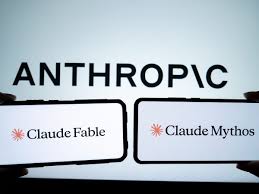
Recognizing this shift, Anthropic has released its latest iteration of model updates: Claude Fable 5.1 and Mythos 5.1. Rather than focusing purely on synthetic benchmark scores, this release targets the operational pain points that developers have voiced over the past year. The headline improvement centers on economics: Anthropic claims that Claude Fable 5.1 provides stronger overall performance than its predecessor while delivering a base cost reduction of approximately 25 percent. Crucially, for complex, multi-step "agentic" tasks, those savings can reach up to 45 percent thanks to restructured prompt caching pricing.
Beyond the financial incentives, the release addresses long-standing complaints regarding hyper-conservative safety refusals, rigid conversational tones, and enterprise data retention policies. The result is a targeted release designed to solidify Anthropic’s position among software engineers and enterprise automation architects.
The Economics of Autonomous Agents
To understand why a 45 percent price reduction for agentic work is significant, one must first look at how autonomous AI agents operate under the hood. Unlike simple single-prompt chatbot queries—where a user asks a question and receives a single response—agentic architectures rely on iterative feedback loops.
An AI agent building a software feature, writing test suites, or conducting deep market research must constantly execute tools, inspect the environment, parse error logs, and re-evaluate its state. In a typical execution loop, an agent might read a repository structure, attempt to edit a file, run a build command, receive a stack trace, and attempt a fix. Each step in this sequence requires sending the full conversation history—including system instructions, accumulated tool calls, environment state, and historical output—back to the API.
This architecture creates an exponential growth in input tokens. By step ten of an automated workflow, 90 percent or more of the tokens submitted in the API request consist of context that the model has already processed in previous steps. Without optimized pricing structures, running agentic loops at scale quickly becomes cost-prohibitive for startups and enterprise teams alike.
Anthropic’s strategy with Fable 5.1 leverages prompt caching—a mechanism that allows the API to store previously evaluated prompt prefix blocks in memory. By drastically reducing the cost of reading cached context, Anthropic directly lowers the marginal cost of multi-turn agent iterations. For teams building autonomous software engineers or complex data analysis agents, this cost reduction shifts projects from financially non-viable experiments into operationally scalable tools.
Refusals, Tone, and Developer Ergonomics
Cost is only half the equation in practical model deployment; model behavior during everyday interaction is equally critical. A common frustration among software engineers using modern frontier models has been overzealous safety alignment. In many prior releases, models would frequently generate false-positive refusals, mistaking benign code samples, security analysis scripts, or administrative commands for malicious intent.
Developer communities frequently complained of working around "preachy" tone guidelines or fighting against strict refusal filters when performing routine technical tasks like security audits, edge-case vulnerability testing, or parsing system diagnostics.
With Fable 5.1 and Mythos 5.1, Anthropic appears to have recalibrated its safety guardrails. The updated models feature revised alignment tuning aimed at drastically reducing false-positive refusals while maintaining core red-line safeguards against harmful material.
Early feedback from developers highlights a noticeable shift in output style. The model’s conversational tone has been adjusted to feel more natural, concise, and direct—eschewing verbose disclaimers and unnecessary conversational filler. In coding workflows, this translates to faster completion times and cleaner code generation, as the model spends fewer tokens explaining what it plans to do and more tokens actually delivering functional output.
Coding Performance and Token Efficiency
For many technology organizations, code generation and automated refactoring represent the primary use case for high-tier AI models. Early impressions of Fable 5.1 point to meaningful gains in software engineering tasks, particularly around token efficiency and instruction adherence.
When writing complex programs, prior models often suffered from "context rot" or lost track of early architectural instructions as the prompt context expanded. Fable 5.1 demonstrates tighter adherence to initial code conventions and structural constraints even across lengthy execution windows.
Furthermore, the model displays enhanced efficiency in how it structures code edits. Rather than rewriting massive blocks of unchanged code—which inflates output token consumption and introduces potential syntax errors—Fable 5.1 defaults to localized, surgical edits when paired with modern tool-use environments. This approach preserves output bandwidth, speeds up execution, and lowers costs further.
In practical testing scenarios, such as converting legacy codebases, generating comprehensive unit test suites, or debugging multi-file architectures, early testers report that Fable 5.1 operates with a level of speed and precision that makes it one of the most effective coding models available on the market today.
Enterprise Privacy and Data Retention Policy Updates
Alongside performance and pricing adjustments, Anthropic has updated its enterprise operational policies around data retention. For large enterprise clients, financial institutions, and healthcare providers, security compliance is often a strict blocker to adopting public cloud AI endpoints.
Concerns over how long prompt data persists on third-party servers, whether customer data is used for downstream model retraining, and how compliance frameworks apply to ephemeral API requests have caused many enterprises to delay full-scale AI integration.
By refining its data retention options alongside the 5.1 rollout, Anthropic is providing enterprises with clearer assurances around data handling and zero-retention capabilities for qualified accounts. By giving compliance officers tighter control over data life cycles and auditing pipelines, Anthropic is removing administrative hurdles that previously slowed enterprise procurement processes.
The Changing Dynamics of the LLM Market
The launch of Fable 5.1 and Mythos 5.1 highlights a major maturation phase in the generative AI industry. The market is shifting away from simple, hype-driven benchmark announcements toward pragmatic, enterprise-grade refinements.
While competitor models continue to push the boundaries of pure multi-modal reasoning, the practical battleground is increasingly defined by real-world efficiency metrics:
- Unit Economics: How much does it cost to execute an automated job from end to end?
- Reliability: Does the model execute tool calls without hallucinating syntax or triggering false safety halts?
- Developer Ergonomics: Is the model easy to interact with, fast in response time, and free of unnecessary fluff?
- Compliance Flexibility: Can global enterprise security teams inspect, manage, and verify data flows?
By attacking all four of these vectors simultaneously with Fable 5.1, Anthropic is positioning its Claude ecosystem as the default choices for production-grade software engineering and agentic automation.
Open Questions for the Agentic Era
As organizations begin migrating their pipelines to Fable 5.1, several broader questions remain for the tech ecosystem:
- Will lower costs unlock true autonomous agents? While a 45 percent reduction in agentic execution costs is substantial, highly complex agents that run hundreds of iterative steps per task can still accumulate non-trivial API bills. Will this price cut be the tipping point for mass enterprise deployment of fully autonomous software engineers, or will human-in-the-loop hybrid models remain the standard?
- How will competitors respond? The pressure is now on competing model providers to match Anthropic’s aggressive pricing models for prompt caching and long-context processing. Will we see reciprocal price cuts across the industry in the coming quarters?
- Can safety recalibration remain stable? Tuning down refusal sensitivity is always a balancing act. As models become more permissive for technical tasks like code execution and system administration, frontier labs must continuously monitor whether bad actors find new pathways to bypass safety guardrails.
For now, the release of Claude Fable 5.1 marks a welcome update for software engineers and enterprise automation builders. By prioritizing cost efficiency, refining model behavior, and doubling down on developer utility, Anthropic has raised the standard for what developers should expect from a production-ready AI platform.