Breathing New Life into Classic Hardware
When Sony launched the PlayStation Portable back in the mid-2000s, it felt like a transmission from the future. With its crisp widescreen LCD, premium metallic accents, and optical UMD drive, it offered home-console-quality graphics in a slick, pocketable chassis. Fast forward nearly two decades, and while the original PSP hardware has aged past its prime, the ergonomics and industrial design remain unmatched. Enter the DIY engineering community, where open-source hardware creators have spent years attempting to retro-fit modern microcomputers into legacy handheld housings.
The latest and most ambitious evolution of this effort is the PSPi 6, a custom hardware interface board designed to drop directly into an original Sony PSP shell, replacing its aging internal motherboard with a high-performance Raspberry Pi module. Created by hardware hacker and tinkerer OtherMod, the PSPi 6 project represents the culmination of six generations of painstaking circuit design, custom PCB routing, and power management optimization. It bridges the gap between nostaglic industrial design and modern emulation performance.
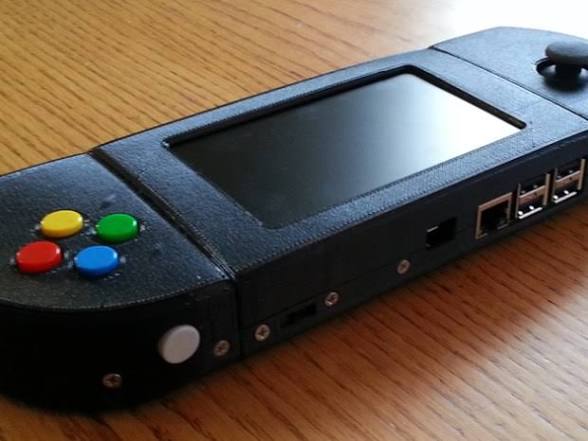
While retro gaming on a Raspberry Pi is hardly a new concept—thousands of enthusiasts build custom retropie arcades and handhelds every month—the PSPi 6 stands out due to its relentless commitment to maintaining original hardware fidelity. Rather than building a bulky, 3D-printed enclosure that vaguely resembles a handheld console, the PSPi system utilizes authentic Sony components, including original buttons, custom-routed analog sticks, and the original power switches, to create a device that looks and feels like an official factory product.
The Technical Engineering Behind PSPi 6
Fitting a full-fledged Linux system into a shell designed in 2004 presents a nightmare of thermal, mechanical, and electronic engineering challenges. The interior of a PSP 1000 chassis is notoriously tight, crammed with structural plastic ribbing, battery contacts, and tightly routed flex cables. To make a modern compute module fit without drastically altering the outer shell, the PSPi 6 relies on a custom carrier board engineered around small-footprint computing boards like the Raspberry Pi Compute Module 4 (CM4) or Pi Zero family.
One of the most impressive technical feats of the PSPi 6 board is its handling of peripheral inputs and display bridging. The original PSP screen uses a proprietary parallel interface that is completely incompatible with modern HDMI or MIPI-DSI standards used by single-board computers. The PSPi 6 solves this by integrating a custom display driver circuit alongside a modern, high-brightness IPS LCD panel that drops directly into the PSP frame, offering vastly superior viewing angles, color saturation, and refresh rates compared to the original, ghosting-prone 2004 panel.
Input processing is another area where custom silicon was necessary. Instead of wiring dozens of discrete switches directly to GPIO pins on the Pi—which would clutter the small interior with a rat's nest of wire—the PSPi 6 incorporates a dedicated microcontroller. This chip acts as an input aggregator, converting signals from the native PSP button PCB, the membrane pads, and the analog joystick into a clean USB HID game controller interface that the underlying operating system recognizes instantly upon boot.
Power management represents the final piece of the hardware puzzle. A single-board computer running heavy emulation draws far more current than the original Sony MIPS processor ever did. The PSPi 6 integrates an intelligent Power Management Integrated Circuit (PMIC) that handles lithium-ion battery charging via USB-C, manages low-voltage cutoffs to protect the cell, and executes clean software shutdowns when the physical power slider is toggled. This ensures that flicking the power switch doesn't corrupt the Linux filesystem on the micro SD card, a common flaw in amateur DIY builds.
Why Retro Handheld Modding Is Exploding
The popularity of projects like PSPi 6 on platforms like GitHub and Hacker News highlights a massive surge in interest surrounding open hardware and retro computing. Over the past five years, a multi-million dollar industry has sprung up around handheld emulation devices, with manufacturers producing dozens of budget-friendly Linux and Android handhelds. Yet, despite the availability of cheap off-the-shelf devices, the enthusiast community remains deeply drawn to custom DIY builds.
Part of this enduring appeal is tactile. Major electronics manufacturers spent tens of millions of dollars during the 1990s and 2000s perfecting the feel of directional pads, button travel, and ergonomic contouring. Modern budget handhelds often suffer from stiff d-pads, cheap plastics, and poor weight distribution. By reusing genuine Sony hardware, the PSPi 6 retains that premium, battle-tested tactile feel that mass-market emulation devices struggle to replicate.
Furthermore, the project embodies the core ethos of the right-to-repair and open-source hardware movements. Rather than relying on proprietary, black-box systems, the PSPi 6 provides complete schematics, open board layouts, and fully documented software setups. Users can audit the hardware, manufacture their own circuit boards through low-cost PCB fabs, solder the surface-mount components themselves, or modify the firmware to add custom functionalities like haptic rumble motors or ambient lighting.
Performance Capabilities and Emulation Ceiling
By leveraging the compute capabilities of modern hardware like the Raspberry Pi Compute Module 4, the PSPi 6 drastically expands what the handheld chassis can achieve. While an original PSP could only play native PSP games, original PlayStation titles, and simple 8-bit or 16-bit emulators, a Pi-powered PSP transformed by the PSPi 6 becomes an all-in-one emulation powerhouse.
Classic 2D consoles like the NES, Super Nintendo, Sega Genesis, and Game Boy Advance run with pixel-perfect accuracy and minimal input latency. Moving into the 3D era, the system handles PlayStation 1, Nintendo 64, and arcade titles with ease. Ironicaly, the device can even emulate the original PSP library via the PPSSPP emulator, often running those classic titles at higher rendering resolutions and more stable framerates than the original Sony hardware could manage native.
Beyond gaming, housing a full Linux system inside a handheld console unlocks unconventional software use cases. With integrated Wi-Fi and Bluetooth, the PSPi 6 can function as a pocket-sized Linux terminal, a mobile network testing tool, a media player, or a client for game streaming platforms like Moonlight and Steam Link. Enthusiasts can stream modern AAA PC games directly to their modified PSP chassis, playing current-generation titles on a design that originally launched during the Era of DVD players and dial-up transitions.
The Hurdles: Component Availability and Assembly Complexity
Despite the impressive capabilities of the PSPi 6, it remains a project intended for advanced hobbyists rather than general consumers. The barrier to entry involves both hardware acquisition and delicate mechanical skill. Assembling a PSPi 6 requires precise soldering, comfort with fine micro-electronics, and the patience to carefully modify tiny internal plastic tabs inside the PSP shell using flush cutters or a rotary tool.
Additionally, supply chain fluctuations present an ongoing challenge for single-board computer projects. The industry-wide shortages of Raspberry Pi modules over recent years forced hardware designers to rethink board designs, creating multi-board compatibility or designing around alternative Compute Modules. Sourcing original, non-working donor PSP consoles in good cosmetic condition is also getting progressively harder as supply diminishes over time.
Software configuration poses another obstacle for newcomers. While pre-built disk images exist, fine-tuning display output timings, configuring input mappings, and optimizing power consumption settings requires a working knowledge of Linux configuration files. It is an educational journey, but one that demands a time commitment far beyond simply unboxing a commercial device.
What PSPi 6 Signal for the Future of DIY Electronics
The launch of the PSPi 6 is a testament to how far accessible hardware design tools have come. A decade ago, creating a custom multi-layer PCB with onboard power management, high-speed display routing, and micro-controller input aggregation was reserved for corporate engineering teams with massive budgets. Today, independent creators can design complex hardware in open-source tools like KiCad, order small batch prototypes from overseas fabricators for less than a hundred dollars, and collaborate with a global community online.
As legacy hardware continues to break down from aging capacitors and dead drive motors, projects like PSPi 6 offer a sustainable path forward for video game preservation and hardware recycling. Instead of letting broken electronics sit in landfills, community-driven hardware engineering gives these classic devices a second life, transforming obsolete media players into modern, open-ended computing platforms that will remain usable for decades to come.