The Era of Metric Fatigue
Every morning, millions of people wake up, look at their wrists, and await a digital grade on their sleep, recovery, and overall readiness. For years, consumer health wearables focused on simple, actionable data points: steps taken, active minutes, continuous heart rate, and approximate calories burned. Today, however, the smartwatch landscape has devolved into a arms race of proprietary algorithmic scores.
With the release of the Samsung Galaxy Watch9, the tech giant continues its push to position its wearable lineup as a comprehensive medical guardian. The hardware remains exceptionally well-crafted, featuring vibrant displays, refined materials, and smooth performance. Yet beneath this polished exterior lies an increasingly convoluted software experience that begs a fundamental question: at what point do health metrics cease being helpful and start becoming digital noise?
As smartwatch manufacturers run out of physical sensors to add to these tiny wrist-bound computers, they are turning toward software abstractions to justify annual upgrades. Samsung's latest wristwear is a masterclass in this trend—delivering deep, accurate tracking alongside a growing pile of esoteric readiness metrics that most users will likely ignore after the first week.
Refined Hardware and Uncompromising Build Quality
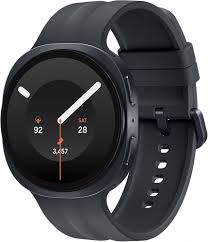
Before diving into the complex web of software offerings, it is worth acknowledging that Samsung continues to excel at smartwatch manufacturing. The Galaxy Watch9 feels like a premium, mature product on the wrist. The display is brighter than ever, making outdoor visibility in harsh sunlight trivial, while the bezel interaction remains responsive and intuitive.
Under the hood, updated processing internals ensure that navigating Wear OS is smooth, fluid, and stutter-free. App launch times are virtually instantaneous, and standard tasks like responding to notifications, initiating workouts, or using turn-by-turn navigation feel effortless. Battery life remains consistent with recent generations, reliably lasting through a full day of heavy usage, active GPS tracking, and overnight sleep monitoring, though daily charging remains a necessity.
Sensors on the underside of the casing have received minor accuracy tweaks. Optical heart rate monitoring during steady-state cardio activities like running or cycling aligns closely with dedicated chest straps. Sleep tracking continues to capture sleep stages—light, deep, REM, and awake intervals—with a high degree of precision relative to consumer-grade devices.
Yet, excellent physical hardware is no longer enough to differentiate a flagship wearable in a saturated market. To convince users to upgrade, Samsung has turned its focus toward synthetic health intelligence.
The Proliferation of Synthetic Health Scores
Upon setting up the device, users are introduced to a dizzying array of composite health metrics. Samsung takes raw sensor data—heart rate variability, sleep history, skin temperature changes, and daily movement—and feeds it through proprietary algorithms to generate simplified numerical scores intended to summarize your physical state.
While the concept sounds ideal on paper, the execution often creates a disconnect between how a user actually feels and what their watch tells them. If you wake up feeling energized, focused, and ready for an intense workout, but your wearable assigns you an arbitrarily low readiness score based on subtle heart rate variability fluctuations, it creates cognitive dissonance.
Furthermore, these composite metrics often lack actionable transparency. A user might receive a score of 62 out of 100, accompanied by vague advice to "take it easy today." Unlike concrete data—such as resting heart rate trends over six months or exact void-of-activity times—algorithmic scores offer little insight into why the number shifted or what specific lifestyle adjustments would yield a higher rating tomorrow.
Instead of empowering users with actionable self-knowledge, the endless stream of scores can induce wellness anxiety, commonly referred to by researchers as orthosomnia or metric fatigue. Users become hyper-fixated on satisfying the algorithm rather than listening to their own bodily cues.
Navigating the Samsung Health Ecosystem
Software fragmentation remains another friction point within the Galaxy Watch experience. While the watch runs Wear OS, providing access to a rich ecosystem of Google services and third-party apps, the core fitness experience is firmly tied to Samsung Health.
For users already embedded in the Samsung ecosystem—owning a Galaxy smartphone and using native apps—the integration is seamless. Data flows effortlessly, syncs reliably, and surfaces nicely on phone widgets. However, for those using non-Samsung Android devices, unlocking the full potential of the watch often requires downloading multiple companion applications, plugins, and specialized services.
Moreover, certain advanced health features remain region-locked or require regulatory approval before becoming active. While basic heart rate, blood oxygen, and step tracking work out of the box, specialized scans often require users to jump through additional software hoops, accepting lengthy disclaimers and privacy agreements that grant access to personal health telemetry.
Despite these software hurdles, the core workout tracking experience remains robust. The watch offers dozens of activity modes, ranging from common sports like running, swimming, and weightlifting to niche activities. Auto-workout detection is quick to engage when walking or running, capturing activity even if you forget to manually start a session.
The Broader Wearables Dilemma
Samsung is far from alone in this strategy. Industry competitors across the board have embraced subscription tiers and composite scores to drive recurring revenue and hardware sales. The industry as a whole is grappling with a central dilemma: hardware innovation in wearables has hit a plateau.
Wrists only offer so much surface area. Battery density advances are incremental, and adding specialized sensors—such as non-invasive glucose monitoring or continuous blood pressure tracking—remains technically challenging and subject to strict medical regulatory standards. As a result, consumer tech brands must rely on software interpretations of existing data streams to create the illusion of groundbreaking progress.
This raises an important question for consumers: how much data do we actually need to live healthier lives? Extensive research demonstrates that basic habits—7 to 8 hours of sleep, regular cardiovascular exercise, strength training, balanced nutrition, and stress management—account for the vast majority of physical health outcomes. A smartwatch can encourage those fundamental behaviors through simple reminders and accurate activity logging. Adding dozens of proprietary, opaque scores rarely changes human behavior in a meaningful, long-term way.
Verdict: Excellent Hardware Overshadowed by Software Overreach
The Samsung Galaxy Watch9 stands as one of the best-built, most full-featured smartwatches available for Android users today. Its hardware engineering, screen clarity, and general smart features—like mobile payments, notification handling, and media controls—are second to none in the Wear OS ecosystem.
If you are looking for a reliable, durable, and stylish smartwatch to track your workouts, handle notifications, and last through the night, the Galaxy Watch9 easily delivers. However, users should approach the expansive suite of proprietary health scores with healthy skepticism. You do not need an artificial intelligence algorithm to tell you if you are exhausted after a terrible night's sleep.
For those willing to ignore the software noise and focus on fundamental tracking, the Galaxy Watch9 is an exceptional wearable. But for buyers hoping that a new array of digital scores will hold the secret key to personal health, this update serves as a reminder that more data does not automatically lead to better living.