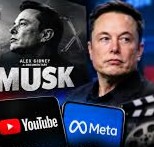
A Sudden About-Face in Digital Ad Moderation
In a notable reversal of corporate policy, two of the world's largest digital advertising platforms have changed their stance regarding promotional content for an upcoming project by Academy Award-winning filmmaker Alex Gibney. Meta and Google-owned YouTube confirmed that they will now allow advertising campaigns for the controversial documentary centered on billionaire entrepreneur Elon Musk.
The initial decision by social media giants to decline advertising space for the film had sparked widespread debate across the technology and media industries. Critics questioned whether the refusal stemmed from conservative content moderation guidelines, automated flag systems, or a desire to avoid conflict with one of the tech sector's most prominent and vocal figures. The quick pivot by both platforms highlights the complex, often opaque mechanisms that govern online speech, political sensitivity, and commercial promotion in the modern digital age.
The Documentary at the Center of the Storm
Directed by Alex Gibney—known for his incisive investigative documentaries on powerful institutions and individuals, including Enron, Scientology, and Theranos founder Elizabeth Holmes—the upcoming film promises a critical examination of Elon Musk's rise to prominence, his management style, and his immense political and economic influence. Given Musk's ownership of X (formerly Twitter), Tesla, SpaceX, and xAI, any major media production analyzing his legacy inherently carries significant commercial and political weight.
Promotional teams attempting to buy ad inventory across major social media networks were initially met with rejections. While the exact reasons provided during the initial sales pitches remained vague, standard rejection codes often cite policy restrictions regarding controversial social issues, political advertising, or the unauthorized use of public figures' likenesses. However, documentary trailers and mainstream film promotions rarely trigger such blanket bans without high-level internal scrutiny.
When news broke that several top-tier ad networks had turned down revenue for promoting a mainstream cinematic release, public interest shifted from the documentary itself to the gatekeeping power exercised by Silicon Valley's dominant platforms.
Automated Flagging Versus Executive Decisions
To understand how a major film advertisement gets banned and then unbanned within a brief news cycle, one must look at the mechanics of digital ad operations. Every day, platforms like Meta (which operates Facebook and Instagram) and YouTube process millions of new ad creative submissions. The vast majority of these submissions are evaluated not by human policy experts, but by automated machine learning models trained to detect policy violations.
These automated systems look for specific flags: copyrighted material, potentially defamatory language, sensitive political themes, or trademarked names. It is entirely plausible that the preliminary rejections were the result of automated systems misinterpreting the documentary's promotional material as unauthorized political attack ads or trademark infringement related to Musk's companies.
However, the resolution of these issues typically requires human intervention. When a high-profile rejection becomes public knowledge, corporate communications and policy teams step in to manually review the asset. Once human operators confirmed that the ad creative met baseline standards for documentary entertainment promotion, the initial decisions were overturned. Yet, this dynamic raises uncomfortable questions: how many lower-profile creators, independent journalists, or small publishers have their ad campaigns permanently suppressed simply because they lack the public profile needed to force a manual review?
The Fine Line Between Advertising and Political Speech
The dispute over the Musk documentary highlights the increasingly murky distinction between commercial product marketing and political commentary. In recent years, major tech platforms have drastically tightened their rules around 'issue ads' and political content. Following elections marred by disinformation campaigns, platforms introduced strict verification processes for anyone running ads that touch upon national security, economic policy, or public figures.
Because Elon Musk has transitioned from an industrial tech executive to a central figure in global political discourse, content about him inherently intersects with contemporary political debates. Ads promoting a film about his life inevitably touch upon sensitive societal topics.
For ad networks, this creates a policy dilemma:
- Strict Categorization: If the ad is classified as political, the distributors must undergo identity verification, display disclaimers, and submit the ad to public repositories.
- Standard Commercial Categorization: If classified as an entertainment product, the ad faces far fewer restrictions and can target broad audiences without special disclosures.
By ultimately accepting the ads, Meta and YouTube appear to have accepted the argument that promotional material for a journalistic documentary should be categorized as an entertainment and media product rather than a targeted political campaign.
Pressure on Tech Giants and the Impact of Public Scrutiny
The decision to reverse the ad bans underscores the power of media visibility in shaping algorithmic enforcement. Had the media distribution team behind Gibney's film quietly accepted the initial rejection, the ad campaign would have remained dead in the water. By drawing public attention to the restrictions, the filmmakers created a public relations challenge for Meta and YouTube.
Both platforms are continuously navigating accusations of bias from across the political spectrum. Silicon Valley executives are deeply sensitive to allegations that they suppress critical reporting or shield fellow tech titans from public accountability. Denying ad space to a recognized filmmaker analyzing one of the wealthiest individuals in the world invited accusations of corporate censorship—a narrative neither Meta nor Google wanted to sustain.
This incident is far from unique. Over the past decade, numerous publishers, advocacy groups, and cultural institutions have reported sudden, unexplained disruptions to their ad accounts, only to have access restored once the story reached major tech outlets. The pattern reveals a persistent structural flaw in modern web infrastructure: system-wide policy enforcement relies on rigid automation, while error correction relies on media amplification.
What This Means for Content Creators and the Future of Digital Media
For independent media creators, documentarians, and investigative journalists, the resolution of this specific dispute offers both a blueprint and a warning. On one hand, it demonstrates that platform decisions are not always final and can be overturned when challenged. On the other hand, it highlights the extreme friction creators face when seeking to distribute work that challenges powerful figures.
As digital platforms continue to serve as the primary distribution channels for news and culture, their ad policies effectively dictate what content can achieve mainstream reach. Organic reach on social networks has steadily declined over the past five years, making paid ad boosts essential for reaching large audiences. When platforms restrict advertising for a project, they effectively limit its cultural footprint, regardless of whether the content remains technically permitted on the platform natively.
Moving forward, digital rights advocates and industry groups are pushing for greater transparency in how advertising moderation systems function. Key demands include:
- Clearer Rejection Reasons: Providing creators with specific, actionable policy citations rather than generic system error messages.
- Streamlined Appeals Processes: Establishing dedicated human review channels for media and journalistic entities before campaigns are outright blocked.
- Independent Oversight: Allowing third-party audits of ad moderation algorithms to ensure rules are applied consistently regardless of the subject matter.
As the release date for Alex Gibney's documentary approaches, the controversy over its promotional strategy has inadvertently served as a effective marketing push. Yet, the underlying systemic issues within digital ad distribution remain unresolved. As long as automated systems act as the primary stewards of online discourse, the boundary between policy enforcement and accidental censorship will remain dangerously thin.