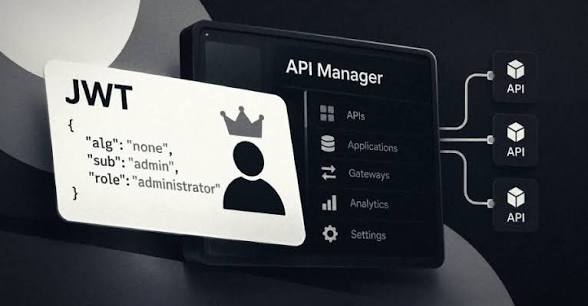
A Critical Flaw Hits Enterprise API Middleware
Security researchers and threat hunters have observed active exploitation targeting a critical vulnerability in WSO2 API Manager. The flaw, designated as CVE-2026-5430 with a near-maximum CVSS rating of 9.8 out of 10.0, enables unauthorized remote attackers to bypass authentication controls and elevate their privileges to full administrator status. Given the central role WSO2 plays in enterprise application architecture, the active targeting of this vulnerability poses a severe threat to organizations worldwide.
Discovered and reported by researchers at Hacktron Team, the vulnerability centers on a fundamental failure in how the API management platform validates JSON Web Tokens (JWTs). Intelligence gathered by cybersecurity firm watchTowr indicates that threat actors have moved swiftly from conceptual understanding to live, automated exploitation attempts. Organizations relying on affected versions of WSO2 API Manager are being urged to audit their infrastructure and apply immediate remediation steps before compromised tokens lead to widespread enterprise breaches.
Understanding the Mechanics of the JWT Bypass
To appreciate the severity of CVE-2026-5430, one must look closely at how modern distributed applications handle identity and access management. WSO2 API Manager acts as an enterprise gateway, routing client requests to internal microservices, managing rate limits, and crucially, verifying user identities. To achieve stateless, scalable authentication, the platform relies heavily on JSON Web Tokens.
A typical JWT consists of three distinct parts separated by dots: a header specifying the signing algorithm, a payload containing user claims (such as user ID and role), and a cryptographic signature generated by the issuing authority. When a client presents a token, the API gateway is tasked with verifying the signature against a trusted public key or secret before honoring the claims inside the payload.
CVE-2026-5430 stems from an improper verification of cryptographic signatures within WSO2's JWT processing logic. Under specific conditions, the underlying parser fails to rigorously validate the signature against the claimed public key or allows flawed algorithm header manipulation. As a result, an attacker can craft a completely forged JWT, assert high-privilege administrative claims in the payload, and sign the token with an arbitrary key or no key at all.
Because the gateway accepts these malformed tokens as valid, the attacker effectively bypasses identity checks. They gain immediate, unauthenticated administrative access to the API management platform. From this vantage point, an adversary is not merely acting as a standard API consumer—they inherit the authority to manage endpoints, inspect backend credentials, and manipulate routing rules across the entire enterprise.
Why API Gateways Are High-Value Targets
In contemporary cloud environments and microservice architectures, API gateways occupy a privileged position. They sit precisely at the boundary between public networks and sensitive internal systems. Rather than attempting to breach dozens of individual backend services, modern threat actors increasingly target the centralized identity and routing layer.
When an API gateway like WSO2 is compromised through authentication bypass vulnerabilities, the downstream consequences are catastrophic:
- Backend Service Exposure: Attackers can discover hidden or internal backend microservices that were never intended to be exposed to the public internet.
- Credential and Key Harvesting: API gateways store sensitive configuration data, including database credentials, API keys, and private certificates used to communicate with internal resources.
- Data Exfiltration: By altering API policies or deploying rogue API proxies, attackers can silently tap into live data streams, harvesting sensitive customer and business data passing through the platform.
- Supply Chain and Service Disruption: An attacker with administrative control can disable key APIs, alter traffic routing, or deploy malicious responses, causing widespread downtime for dependent web and mobile applications.
Because WSO2 API Manager is widely deployed across telecommunications, financial services, healthcare, and government sectors, a compromise at this level yields extensive lateral movement opportunities for advanced persistent threat (APT) groups and cybercrime syndicates alike.
The Timeline from Discovery to Exploitation
The gap between vulnerability disclosure and active exploitation continues to shrink dramatically across the cybersecurity landscape. In the case of CVE-2026-5430, the vulnerability was responsibly discovered by the Hacktron Team and disclosed to WSO2 for patching. However, once threat intelligence providers like watchTowr began detecting active reconnaissance and token forgery attempts in wild honeypots, the bug transitioned from a theoretical risk to an active emergency.
Automated scanning scripts deployed by malicious actors routinely monitor public IP ranges for exposed WSO2 endpoints. Once an instance is identified, these tools attempt to inject forged JWTs containing administrative claims into standard headers. If the target server responds with a 200 OK status rather than a 401 or 403 authorization error, the automated tool flags the target for follow-up manual exploitation or automated data extraction.
This rapid weaponization highlights a persistent challenge for enterprise defense teams: patch deployment cycles often lag behind the speed at which threat actors can analyze software updates, reverse-engineer fixes, and generate working exploits.
Immediate Mitigation and Remediation Strategies
For organizations operating WSO2 API Manager, waiting for standard maintenance windows is not a viable option. Security teams should execute a structured response plan immediately to mitigate the risks associated with CVE-2026-5430.
1. Apply Official Patches and Upgrades
System administrators should immediately consult WSO2's security advisories and apply the appropriate hotfixes or upgrade to the latest patched releases of WSO2 API Manager. Ensure that all nodes in a clustered deployment are updated uniformly to prevent mixed-version vulnerabilities.
2. Audit Existing API Gateway Logs
Organizations should review access logs for anomalous behavior dating back several weeks. Look specifically for:
- HTTP requests containing unusual or improperly formatted authorization headers.
- Inbound JWTs where the algorithm header is set to
none, or uses unexpected asymmetric algorithms. - Unexplained administrative actions taken within the WSO2 management console, such as the creation of new user accounts, modification of API subscriptions, or changes to backend endpoint configurations.
3. Implement Strict WAF Rules
While applying the vendor patch is the primary defense, deploying Web Application Firewall (WAF) rules can provide a crucial stopgap layer. Configure WAF inspection policies to drop incoming requests with malformed JWT structures or unexpected cryptographic algorithms in the token header before they reach the gateway software.
4. Rotate Internal Keys and Credentials
If evidence suggests that an instance may have been compromised prior to patching, assume that secrets stored within the platform have been exposed. Security teams should rotate all backend service credentials, database passwords, and signing keys associated with the API Manager deployment.
Broad Lessons for Modern API Security
The active exploitation of CVE-2026-5430 underscores broader lessons for software developers and enterprise architects. Cryptographic verification logic must be implementation-hardened and heavily tested against edge cases. Libraries responsible for parsing JWTs must strictly enforce algorithm restrictions, rejecting any token that does not explicitly match the expected signing algorithm and trusted key pair.
Furthermore, zero-trust architecture principles must extend to internal API management layers. An API gateway should not be viewed as an impenetrable fortress; downstream microservices should maintain their own independent authorization checks where possible, rather than relying solely on the gateway's upstream validation.
As threat actors continue to prioritize middleware and identity providers, organizations must maintain rigorous asset inventories, aggressive patch management protocols, and robust log analytics to detect forged tokens before they turn into full-scale enterprise breaches.