Valve Unveils Steam Frame VR Headset Amid Rising Component Costs
For years, rumors circulated across hardware forums and developer networks that Valve was preparing its next major leap into virtual reality. Building on the foundation laid by the original Valve Index and the massive commercial success of the portable Steam Deck, hardware enthusiasts anticipated a device that would democratize high-end VR. Today, the company officially pulled back the curtain on the Steam Frame—a sophisticated headset designed to push immersive computing forward, albeit at a price point that highlights the harsh economic realities currently gripping the consumer electronics supply chain.
Retailing at $1,059, the Steam Frame arrives at a delicate moment for the extended reality (XR) industry. While early leaks suggested Valve aimed to release a vastly more accessible device, macroeconomic headwinds, aggressive demand for enterprise computing, and severe fluctuations in component pricing forced a strategic pricing pivot. The resulting hardware delivers uncompromised performance, but its top-tier price tag re-anchors Valve’s VR strategy firmly in the enthusiast tier.
The Anatomy of the Steam Frame
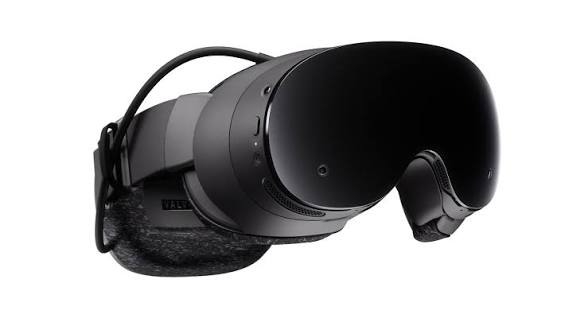
The Steam Frame is designed as a standalone and PC-tethered hybrid, aiming to combine the wireless freedom popularized by mainstream mobile headsets with the uncompressed fidelity demanded by high-end PC gaming setups. Powered by a custom-architected system-on-chip developed in partnership with leading silicon designers, the headset boasts dual high-refresh-rate displays, advanced pancake optics, and integrated inside-out tracking systems that eliminate the need for external base stations.
Valve has also overhauled its ergonomics and input methodology. The device features refined controllers that build on the capacitive touch and finger-tracking capabilities of the Index Knuckles, offering deeper haptic feedback and improved battery efficiency. Micro-adjustability has been prioritized, featuring dynamic interpupillary distance (IPD) adjustments driven by internal eye-tracking cameras. These cameras serve a dual purpose: enabling effortless calibration for individual users and driving real-time foveated rendering to optimize performance.
By leveraging foveated rendering—a technique where only the precise area of the display where the user is looking is rendered at maximum resolution—the Steam Frame drastically reduces the computational burden on its internal processor and host PCs. This feature is vital for running modern AAA gaming titles at high frame rates, which are crucial for preventing motion sickness and maintaining immersion.
Global Supply Chain Bottlenecks Strike Again
Despite the technical achievements packed into the chassis, the most talked-about aspect of the announcement is the $1,059 price point. Valve has built a reputation over recent years for aggressive, hardware-subsidized pricing, most notably with the entry-level Steam Deck models, which were widely understood to be sold on razor-thin margins—or even at a slight loss—to expand the Steam platform's software ecosystem.
With the Steam Frame, however, external supply chain dynamics constrained Valve's ability to lower the barrier to entry. Key engineering leads at the company acknowledged that initial product roadmaps targeted a significantly lower price. However, global market shifts in high-bandwidth memory, standard RAM, and solid-state flash storage forced a reassessment of manufacturing economics.
Over the past eighteen months, global demand for memory modules has skyrocketed, driven largely by massive enterprise investments in artificial intelligence infrastructure and data center expansions. Semiconductor fabricators have reallocated substantial production capacity toward high-margin enterprise chips, tightening the supply of consumer-grade DRAM and NAND flash storage. As a result, procurement costs for hardware manufacturers have climbed across the board.
Because high-performance VR headsets require ultra-fast memory with low latency to process multiple camera streams and render high-resolution double-buffered frames simultaneously without micro-stuttering, cutting corners on memory specs was not a viable path for Valve's engineering team. The choice came down to delaying the hardware indefinitely, degrading the user experience with lower-tier components, or adjusting the retail price to reflect actual bill-of-materials costs.
Pricing Strategy: Margin vs. Ecosystem Growth
Valve's approach to hardware hardware pricing has always differed fundamentally from traditional consumer electronics vendors. Companies like Apple or HTC rely heavily on hardware profit margins to sustain their operations. Valve, operating the dominant digital distribution platform Steam, profits predominantly from software sales, in-game microtransactions, and platform service fees.
This platform model theoretically allows Valve to sell hardware at cost. Industry analysts have pointed to the original $399 Steam Deck and previous living room hardware experiments like the Steam Machine as clear evidence of Valve utilizing hardware as a loss-leader to capture user attention and lock players into its software library.
Whether the Steam Frame is being sold at cost remains a topic of intense discussion among industry observers. While Valve representatives have stopped short of revealing exact margin breakdowns, statements from the engineering team suggest that even at $1,059, the company is absorbing significant overhead. The sheer density of expensive components—ranging from custom display panels to eye-tracking sensor arrays and premium materials—means that manufacturing and assembly costs consume the vast majority of the retail price.
In essence, Valve appears to be applying a near-zero-margin model to a device whose base manufacturing cost simply sits far higher than initially projected. Without Valve's platform-backed pricing philosophy, a headset featuring the Steam Frame's feature set might easily have pushed past the $1,500 threshold in the current hardware environment.
The XR Landscape in 2026
The arrival of the Steam Frame highlights a growing polarization in the virtual and mixed reality market. On one end of the spectrum sits lower-cost consumer devices designed for mass adoption, media consumption, and casual gaming. On the opposite end sit ultra-premium spatial computing platforms that cost several thousand dollars, targeting enterprise users and early adopters willing to pay top dollar for cutting-edge productivity tools.
The Steam Frame occupies the space between these extremes, targeting the dedicated PC gaming audience and creative enthusiasts. However, breaking into the four-figure pricing tier presents clear challenges:
- Addressing the Enthusiast Niche: At over $1,000, the Steam Frame shifts from an impulse purchase to a major technology investment, likely limiting immediate adoption to high-end PC gamers who already possess high-performance graphic cards.
- Developer Incentives: Software studios require a critical mass of active users to justify the multi-million-dollar budgets needed for full-length VR titles. A higher entry price for hardware could slow user base growth, creating a classic chicken-and-egg scenario for developer investment.
- Platform Wars: Meta continues to subsidize its standalone hardware aggressively to capture market share, while Apple focuses on spatial productivity. Valve's focus remains squarely on gaming fidelity and open ecosystem integration, a stance that resonates strongly with core PC hardware enthusiasts but requires clear software wins to sustain long-term momentum.
What This Means for PC Gaming and Open Platforms
Beyond hardware specifications and retail prices, the launch of the Steam Frame carries broader implications for the open gaming ecosystem. Unlike closed hardware ecosystems that enforce strict app-store monopolies, Valve continues to advocate for an open platform philosophy. The Steam Frame fully supports native SteamVR integration, open standards like OpenXR, and seamless streaming from Linux-based and Windows PCs.
Furthermore, Valve’s ongoing investment in Proton—the compatibility layer that enables Windows games to run smoothly on Linux-based operating systems like SteamOS—plays a central role in the Steam Frame’s software architecture. By decoupling high-performance gaming software from single OS platforms, Valve ensures that its hardware investments remain resilient against broader industry shifts.
Developers who have tested early units report that the integration of dynamic foveated rendering directly into the SteamVR runtime allows existing VR software titles to achieve substantial performance boosts with minimal developer intervention. This backward compatibility guarantees that buyers instantly gain access to a mature catalog of hundreds of VR titles, softening the blow of the high hardware cost.
Looking Ahead: Can Component Prices Ease?
The central open question for the Steam Frame—and the broader consumer electronics market—is whether component supply chains will normalize in the coming quarters. If memory fabrication capacity expands and component costs decline, Valve could eventually introduce mid-cycle price adjustments or launch revised configurations with lower price points.
For now, the Steam Frame stands as a powerful testament to modern hardware engineering operating under severe macroeconomic constraints. It offers high-end performance, exceptional tracking, and seamless software integration, but its price tag serves as a stark reminder that even tech giants are not immune to the pressures of global supply chains.
As units begin shipping to early backers and hardware reviewers worldwide, the coming months will reveal whether the enthusiast PC gaming community is ready to embrace a $1,059 gateway to the next generation of virtual reality.