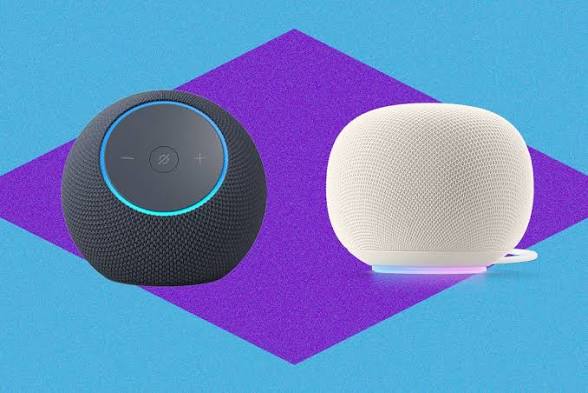
For nearly a decade, the humble smart speaker was defined by a fairly rigid set of boundaries. You asked for the weather, set a kitchen timer, triggered a couple of smart light switches, and played a favorite playlist. If you pushed the voice assistant beyond those simple commands, you were inevitably met with a synthetic apology or an unhelpful web search result pushed to your smartphone. Voice control felt less like a conversation and more like navigating a voice-frequency menu with rigid voice macros.
That dynamic has completely dissolved. The arrival of on-device generative AI, large language models customized for low-latency voice interactions, and universally adopted smart home connectivity protocols like Matter and Thread have fundamentally elevated smart audio devices. A smart speaker in 2026 is no longer just an automated audio appliance; it is an intelligent hub capable of complex multi-step automation, contextual reasoning, and remarkably sophisticated sound reproduction.
Whether you are building a smart home setup from scratch or considering an upgrade to an existing multi-room system, choosing the right speaker ecosystem comes down to how you weigh artificial intelligence capabilities, acoustic performance, platform privacy, and smart home interoperability.
The AI Evolution: From Scripted Macros to Generative Context
To understand why the smart speaker landscape feels so refreshed today, one must look at the software engines driving these devices. The transition from legacy voice assistants to modern generative models has changed the core user experience.
Google led this charge by deeply integrating its Gemini architecture into the Nest hardware lineup. Rather than relying on exact wake-word phraseology, users can speak to a Gemini-powered Nest speaker using natural, rambling sentences. You can ask a Nest device to organize a multi-step routine based on vague descriptions—such as 'get the living room ready for movie night, lower the shades halfway, and remind me to move the laundry in forty-five minutes'—and the system executes the sequence effortlessly without requiring pre-configured app routines.
Amazon similarly overhauled its Echo ecosystem, backing Alexa with updated conversational models designed to maintain multi-turn context. Alexa can now hold persistent, natural dialogues, remembering previous queries within a conversation without forcing you to repeat the wake word continuously. This makes asking complex follow-up questions about schedule planning, local recommendations, or household troubleshooting feel genuinely interactive.
Apple took a distinct architectural path with its HomePod family. Leveraging Apple Intelligence, the Cupertino tech giant prioritized hybrid processing. While complex queries run through secure, private cloud compute infrastructure, basic contextual awareness, home automation routines, and personal requests are handled on-device using local hardware acceleration. Siri on the HomePod has evolved from a frequent source of user frustration into an efficient, context-aware command center that understands user intent even when phrasing is imprecise.
Amazon Alexa: The Unrivaled Smart Home Workhorse
Amazon continues to dominate the sheer volume and diversity of smart home hardware, offering options that span from ultra-affordable micro-speakers to high-fidelity spatial audio display hubs. The strength of the Alexa platform remains its unyielding focus on smart home compatibility and sheer flexibility.
Hardware Diversity and Utility
Amazon’s strategy relies on meeting users in every room of the house. The compact Echo Dot remains the go-to gateway for low-cost voice control, ideal for nightstands, bathrooms, and small office spaces. Meanwhile, the standard Echo balances mid-tier acoustic driver performance with built-in smart home hub capabilities, making it a reliable foundation for mainstream users.
At the top end of Amazon’s audio-first line sits the Echo Studio. Designed to compete with dedicated hi-fi wireless speakers, the Studio leverages spatial audio processing, Dolby Atmos decoding, and auto-sensing room acoustics to deliver punchy bass and expansive soundscapes. For users who prioritize visual feedback alongside voice control, the Echo Show series provides crisp touchscreens that double as security monitor stations and digital photo frames.
The Ecosystem Advantage
If your primary goal is controlling an expansive matrix of smart lights, robotic vacuums, garage doors, and environmental sensors, Amazon remains a top contender. Its skill ecosystem, paired with broad native support for zigbee, Matter, and Thread, ensures that virtually every connected home gadget on the market works smoothly within the Alexa app environment.
Google Nest and Gemini: Contextual Knowledge and Integration
Google’s smart speaker line, anchored by the Nest Mini and Nest Audio, approaches ambient home computing from a knowledge-first perspective. While Amazon excels at broad device control, Google excels at answering complex questions, managing schedules across the Google Workspace ecosystem, and managing media streaming.
Acoustic Precision and Aesthetic Subtlety
The Nest Audio represents one of the cleanest balances of price and performance on the market. Wrapped in durable, eco-friendly fabric, its industrial design blends seamlessly into modern home decor without broadcasting itself as a piece of high-tech gear. Acoustically, Google focused heavily on vocal clarity and natural mid-range balance. Dialogue in podcasts, talk radio, and vocal-heavy music tracks sounds rich and articulate, avoiding the muddy lower-frequency boost that plagues cheaper smart speakers.
The Gemini Power Boost
With Gemini acting as the underlying brain, Google Nest speakers handle natural language processing remarkably well. The system excels at parsing compound queries and indirect instructions. Tell a Gemini-enabled Nest Audio, 'It feels a bit chilly in here and the lighting is too harsh for dinner,' and the speaker intelligently communicates with your connected smart thermostat and dimmers to adjust the environment without requiring explicit, rigid commands. Furthermore, for households embedded in Android, Google Calendar, YouTube Music, and Google Maps, the cross-device continuity offered by Nest hardware remains unmatched.
Apple HomePod: High-End Audio Meets Privacy-First Engineering
Apple’s philosophy regarding smart speakers has always inverted the typical industry approach: build a premium acoustic instrument first, and embed smart assistant functionality second. That design ethic shines clearly across both the full-sized HomePod and the compact HomePod mini.
Audiophile-Grade Engineering
The full-sized HomePod is engineered for sound enthusiasts who want simple, room-filling audio without setting up complex receiver systems and passive speaker cabinets. Utilizing a custom high-excursion woofer, an array of beamforming tweeters, and real-time computational audio, the HomePod samples room reflections several times a second to tune its sound output dynamically. The result is crystal-clear highs, tight and controlled low-end response, and immersive spatial audio placement when listening to Apple Music tracks mastered in Dolby Atmos.
Even the smaller HomePod mini punches far above its weight class. Utilizing a full-range driver and dual passive radiators driven by custom silicon, it produces a balanced, distortion-free soundstage that comfortably fills bedrooms and home offices.
Deep Apple Ecosystem Lock-In and Security
Where the HomePod shines brightest is within an all-Apple household. Handing off audio playback from an iPhone to a HomePod requires nothing more than bringing the phone near the top of the speaker. Intercom functionality allows family members to broadcast voice messages seamlessly across Apple devices, including iPhones, iPads, Apple Watches, and AirPods.
Crucially, Apple’s strict approach to data privacy serves as a major selling point. Request processing is tied to randomized identifiers rather than persistent user profiles, and on-device processing ensures that intimate home command logs are kept away from advertising networks.
Matter and Thread: The End of Ecosystem Lock-In
One of the most transformative developments shaping smart speakers in 2026 is the maturity of the Matter standard and Thread networking protocol. In previous years, buying an Echo meant you were largely committed to the Alexa universe, while buying a HomePod locked you into HomeKit. Choosing a speaker meant choosing an entire smart home religion.
Today, that friction has largely vanished. Major smart speakers from Amazon, Google, and Apple now double as Matter controllers and Thread Border Routers. A smart plug or light bulb commissioned via Matter can be controlled simultaneously by a Google Nest Audio in the kitchen, a HomePod in the living room, and an Alexa voice remote in the bedroom.
This cross-platform interoperability means buyers no longer have to sacrifice voice assistant intelligence for smart home device compatibility. You can select your smart speaker based purely on audio preference, price point, design language, and preferred digital ecosystem without worrying whether your smart lock or thermostat will remain compatible.
Key Considerations Before Buying
Selecting the ideal smart speaker requires weighing several key trade-offs:
- Audio Intent: If your primary goal is high-fidelity music playback in a main living space, premium choices like the Apple HomePod or Amazon Echo Studio offer superior driver configurations and spatial audio processing. For background music, podcasts, or kitchen queries, mid-tier options like the Nest Audio or standard Echo deliver exceptional value.
- Ecosystem Alignment: Aligning your speaker with your primary smartphone platform yields tangible benefits. iPhone users gain seamless handoff capabilities and Apple Watch integration with HomePods, while Android users benefit from native Google Cast support and deep Google Workspace synchronization on Nest devices.
- Privacy and Data Policy: If minimizing cloud data collection is a priority, Apple’s local processing architecture provides robust privacy safeguards. Conversely, if maximum contextual access to public web data and third-party integrations is key, Google and Amazon offer broader web search capabilities.
- Placement and Microphones: Consider room size and acoustics. Speakers equipped with far-field microphone arrays and automated spatial calibration perform drastically better in large, open-concept spaces with high ceilings than entry-level micro-speakers.
The Verdict: Ambient Intelligence Settles In
The smart speaker market has matured from a gimmick-laden novelty into a cornerstone of modern home infrastructure. Driven by generative AI models that understand natural human conversation and backed by unified connectivity standards that break down platform walls, the smart speakers of 2026 offer unprecedented utility.
Whether you prioritize the deep conversational capabilities of Google’s Gemini, the vast hardware diversity and smart home mastery of Amazon Alexa, or the acoustic elegance and privacy safeguards of Apple’s HomePod, there has never been a better time to bring intelligent sound into your living space.