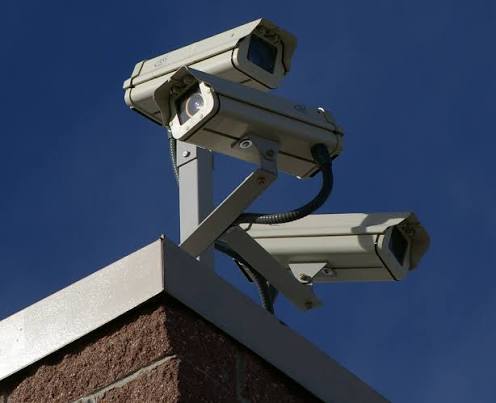
Security cameras are almost universally designed around a single, defensive mindset: paranoia. Commercial home surveillance systems like Ring, Nest, and various IP camera setups spend their operational lives scanning driveways and porches for package thieves, trespassers, or late-night delivery drivers. However, a growing community of makers, privacy advocates, and nature enthusiasts are actively repurposing this hardware for something far more constructive. By tapping into open streaming protocols and pairing them with local machine learning models, tinkerers are converting routine security cameras into automated bioacoustic and visual bird identification stations.
What started as a niche experiment shared across technical forums like Hacker News has rapidly captured the imagination of the smart home community. By combining open-source bioacoustic models—such as BirdNET—with edge computing hardware, homeowners can detect, classify, and log hundreds of bird species visiting their yards in real time. This movement highlights a fundamental shift in how we think about smart home infrastructure: moving away from cloud-tethered surveillance and toward locally driven, curiosity-focused environmental monitoring.
From Paranoia to Bioacoustics: Repurposing Home Surveillance
For years, consumer security cameras have offered motion detection that was, at best, crude. Early systems relied on simple pixel-change algorithms, triggering false alarms whenever wind blew through a tree or an insect flew past the lens. While modern cameras employ cloud-based object detection to differentiate between humans, vehicles, and pets, these feature sets remain tightly locked within vendor ecosystems and monthly subscription paywalls.
DIY tech enthusiasts have long sought alternatives by deploying cameras that support open protocols like RTSP (Real-Time Streaming Protocol) and ONVIF (Open Network Video Interface Forum). These standard protocols allow users to pull raw audio and video feeds directly from their cameras over a local network, bypassing proprietary cloud platforms entirely. Once audio and video feeds are unlocked, the camera effectively becomes a flexible sensor array capable of feeding data into any software pipeline the user chooses to build.
Instead of discarding the audio track or using it merely to listen for broken glass or loud noises, developers realized that security camera microphones continuously capture an incredible amount of biological data. In suburban and rural environments alike, the ambient soundscape is filled with avian calls. By routing this continuous audio feed into specialized machine learning software, ordinary security hardware transforms into a sophisticated ecological observatory.
The Science Behind the Song: Machine Learning Meets Bioacoustics
At the core of automated bird identification is bioacoustics—the study of cross-species sound production and perception. Identifying bird species by sound alone is notoriously difficult for humans, requiring years of field experience to distinguish subtle variations in pitch, frequency, and cadence. For machine learning models, however, the problem becomes much more tractable when audio is converted into a visual format.
The magic behind tools like BirdNET—developed jointly by the Cornell Lab of Ornithology and Chemnitz University of Technology—relies on transforming raw audio recordings into spectrograms. A spectrogram is a two-dimensional visual representation of sound, where the horizontal axis represents time, the vertical axis represents frequency, and the brightness or color indicates the amplitude (loudness) of the sound at any given moment.
Once an audio stream is converted into a series of short spectrogram images (typically covering three-second intervals), the task of identifying a bird call effectively converts into an image recognition problem. Deep Convolutional Neural Networks (CNNs), which excel at identifying patterns within images, are trained on massive datasets containing millions of annotated bird recordings from around the world. The neural network analyzes the distinct visual geometric signatures created by bird calls on the spectrogram—such as trills, whistles, chirps, and buzzes—and outputs a statistical probability distribution of potential matching species.
While the original BirdNET framework was designed to run on desktop servers or via cloud APIs, projects like BirdNET-Go have reimplemented these capabilities in lightweight, compiled languages like Go. This enables high-throughput, low-latency audio processing directly on modest, low-power edge hardware without needing constant internet connectivity.
Architecture of a DIY Wildlife Station
Building an automated bird monitoring setup at home involves assembling a modular software and hardware pipeline. Because the components communicate through standardized protocols, creators can customize their architecture based on available hardware.
+-----------------------+ | RTSP / ONVIF Camera | | (Audio / Video Stream)| +-----------+----------+ | v +-----------------------+ | Stream Ingestion | | (go2rtc / FFmpeg) | +-----------+----------+ | v +-----------------------+ | Processing Pipeline | | (BirdNET-Go / TFLite) | +-----------+----------+ | v +-----------------------+ | Home Automation Hub | | (Home Assistant / MQTT| +-----------------------+
The pipeline typically begins with a Weatherproof Power over Ethernet (PoE) or Wi-Fi IP camera positioned near a garden, bird feeder, or tree line. Key hardware considerations include microphone quality and sensitivity; cameras with high signal-to-noise ratio preamps perform drastically better than cheap models that introduce severe hiss or compression artifacts.
Next, a stream manager such as go2rtc or FFmpeg ingests the continuous RTSP stream from the camera over the local area network. The manager splits or transcodes the stream, isolating the audio track into raw PCM or AAC format and segmenting it into uniform temporal chunks.
These audio chunks are pushed to the bioacoustic engine—such as BirdNET-Go running inside a Docker container on a local server, a Raspberry Pi 4/5, or a low-cost N100 mini PC. The software evaluates each segment against its trained TensorFlow Lite model. If the confidence threshold for a detected species crosses a user-defined limit (for instance, 70% or higher), the system logs a positive detection.
Finally, the detection metadata—including species name, confidence score, timestamp, and an audio snippet—is published over MQTT (Message Queuing Telemetry Transport) to a home automation platform like Home Assistant. From there, users can configure dynamic dashboards, push real-time notifications to their phones, trigger pan-tilt-zoom (PTZ) cameras to physically look for the bird, or archive the event into a local relational database for long-term trend analysis.
The Edge AI Advantage: Privacy, Reliability, and Zero Fees
One of the most compelling aspects of this project format is its heavy reliance on local edge computing rather than cloud services. In an era where smart home devices are increasingly burdened by mandatory cloud subscriptions, sudden API deprecations, and privacy scandals, local processing offers several critical advantages.
First and foremost is privacy. Continuous audio recording inside or immediately outside a private residence raises legitimate security concerns. Passing raw audio streams to commercial third-party cloud servers risks exposing ambient human conversation or private household activities. By keeping the entire inference pipeline strictly on the local network (LAN), sensitive audio data never leaves the home. Only structured text metadata (e.g., "Blue Jay detected at 08:14 AM") is generated and saved.
Second is financial independence. Subscriptions for commercial cloud AI processing can quickly add up, especially when processing continuous, 24/7 video and audio streams. Edge AI leverages hardware that the user already owns, incurring zero recurring operational costs beyond nominal electricity consumption.
Third is resilience and performance. Cloud-dependent AI solutions suffer from network latency and break entirely during internet outages. Local systems operate with millisecond-level responsiveness and continue analyzing environmental data uninterrupted, regardless of external ISP connectivity.
From Personal Projects to Citizen Science
While identifying backyard birds is a satisfying hobby for tech enthusiasts, the cumulative value of these distributed DIY setups reaches far beyond individual yards. The aggregate data collected by thousands of edge sensors across urban and suburban environments holds enormous potential for ecological research.
Traditional bioacoustic research in ornithology often relies on professional researchers deploying temporary acoustic recorders in remote forests or nature preserves. These deployments are inherently constrained by limited budgets, sparse geographic coverage, and short field seasons. By contrast, a network of permanent, self-hosted neighborhood monitoring stations creates a dense, multi-year dataset tracking urban micro-habitats.
When integrated with global citizen science platforms like eBird (run by the Cornell Lab of Ornithology) or iNaturalist, local bird identification logs contribute to broader scientific research. Scientists can analyze these automated logs to track:
- Micro-Migration Timing: Detecting exact arrival and departure dates for migratory species down to individual zip codes, providing granular data on how climate variations alter traditional migration schedules.
- Urban Refuge Dynamics: Understanding how specific suburban native plantings, water features, or bird feeders impact local biodiversity compared to concrete-dense urban centers.
- Avian Nocturnal Flight Calls: Capturing the faint calls of birds flying overhead at night during peak spring and autumn migration windows—calls that human observers almost never hear.
By democratizing access to high-accuracy bioacoustic models, open-source projects convert everyday consumer hardware into distributed, crowd-sourced climate and ecology monitoring tools.
Practical Challenges and Environmental Realities
Despite the remarkable accuracy of modern bioacoustic networks, deploying a real-world system reveals several non-trivial engineering and environmental challenges that developers must navigate.
Acoustic Artifacts and False Positives: Backyard soundscapes are inherently noisy environments. Lawn mowers, passing sirens, HVAC compressors, traffic noise, and human speech present complex interference. Furthermore, certain avian mimics—such as the Northern Mockingbird, European Starling, or Blue Jay—frequently imitate other species, mechanical alarms, or even car horns. Overcoming these false positives requires tuning confidence score thresholds, applying audio noise reduction filters prior to inference, or cross-referencing audio detections with visual object detection models like Frigate NVR or YOLO.
Hardware Constraints and Audio Quality: Not all IP security cameras are created equal. Many budget cameras compress audio aggressively using low-bitrate codecs (such as G.711) optimized purely for voice intelligibility rather than full-spectrum acoustic fidelity. High frequencies essential for distinguishing small songbirds can be clipped or distorted by aggressive noise-suppression algorithms built into the camera's firmware. Users often need to select cameras with uncompressed audio options or install dedicated USB/PoE microphones alongside their visual cameras.
Data Management and Storage: Running continuous 24/7 bioacoustic detection generates massive volumes of data. A system processing an audio check every 3 seconds performs 28,800 inferences per day per camera. Without aggressive retention policies, structured database indexing, and automated cleanup scripts for audio clip archives, local storage can rapidly become overwhelmed.
The Changing Landscape of Personal Technology
Projects like automated bird identification mark a refreshing departure from the conventional trajectory of smart home technology. For years, consumer IoT products have focused on consumerism, automation for the sake of convenience, or restrictive surveillance. The convergence of accessible edge AI, low-power hardware, and flexible open-source software opens up an entirely new category of home technology: purpose-driven, context-aware ecological computing.
Instead of isolating homeowners behind walled gardens and motion alerts, these technologies encourage users to look outward and re-engage with the natural world around them. As bioacoustic and computer vision models continue to decrease in size while improving in accuracy, the line between consumer security hardware and scientific research instrumentation will continue to blur. For tech enthusiasts willing to build their own pipelines, the backyard is no longer just a space to watch—it is a live dataset waiting to be explored.