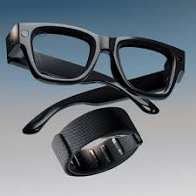
The Shift from Virtual Worlds to Daily Wearables
For years, Meta’s vision of the future was inextricably linked to the concept of the metaverse—a fully immersive, virtual space accessed primarily through heavy, face-swallowing Virtual Reality (VR) headsets. However, the atmosphere at Meta’s recent developer conference signaled a decisive, pragmatic shift in hardware strategy. Rather than attempting to pull users entirely out of physical reality, the social media giant is focusing aggressively on augmenting it through ambient, everyday technology. Smart glasses have officially moved from a niche side project to the absolute core of Meta’s consumer hardware ambitions.
Throughout the event, smart eyewear was ubiquitous. Executives, developers, and attendees were seen sporting various iterations of connected frames. The clear message sent to investors and consumers alike is that Meta believes the next primary personal computing platform won't live in your pocket or strapped to a massive visor on your head; it will sit right on the bridge of your nose.
The Evolution of the Ray-Ban Collaboration
To understand how Meta arrived at this point, one must look back at its hardware journey over the last half-decade. The company's initial foray into consumer hardware focused heavily on the Oculus (now Meta Quest) line. While the Quest headsets achieved remarkable success within the gaming community, they consistently struggled to cross over into mainstream, all-day utility. They were too heavy, caused facial fatigue, and isolated the user from their immediate surroundings.
Enter the partnership with EssilorLuxottica, the eyewear giant behind Ray-Ban. The first iteration of Ray-Ban Stories was largely viewed as a proof-of-concept—a fashion-first frame equipped with basic cameras and speakers, but hampered by poor battery life, mediocre audio, and limited functionality.
However, the subsequent generations completely redefined expectations. By shrinking components, improving audio quality, and crucially, integrating conversational artificial intelligence, the glasses transformed from a camera-gimmick into an indispensable audio-visual assistant. The success of these devices proved a critical hypothesis for Meta: consumers are willing to wear technology on their faces, provided it looks like high-end eyewear and offers immediate, frictionless value.
Multimodal AI as the Core Engine
What makes Meta’s current push into smart glasses far more compelling than early attempts like Google Glass is the maturity of the underlying software architecture. The hardware acts merely as the sensor array—eyes and ears—for Meta’s rapidly evolving AI models.
With multimodal AI capabilities, smart glasses are no longer restricted to simple voice commands or taking quick photos. They can process environmental context in real-time. A user looking at a monument can ask for its history; someone standing in front of a refrigerator open with random ingredients can ask for a recipe; a traveler looking at a foreign menu can receive an instant translation streamed directly into their open-ear speakers.
By leveraging continuous environmental awareness, Meta is positioning its hardware as the ultimate interface for generative AI. It eliminates the friction of pulling out a smartphone, unlocking it, opening an app, and pointing the camera. The interaction model becomes conversational, continuous, and remarkably natural.
The Hardware Engineering Challenge
The push toward sleek, everyday smart glasses is fundamentally an exercise in navigating brutal engineering trade-offs. Building a device that weighs under 50 grams while housing micro-displays, spatial audio speakers, multiple camera sensors, Bluetooth radios, and custom silicon requires unprecedented miniaturization.
Thermal Management and Power
One of the most persistent bottlenecks in wearable technology is thermal dissipation. Unlike a computer or smartphone, a pair of glasses rests directly against human skin, particularly sensitive areas like the temples and ears. Any significant heat generated by processing onboard AI tasks or streaming high-definition video becomes immediately uncomfortable.
To combat this, Meta’s hardware team has relied heavily on offloading intensive compute tasks to nearby paired smartphones or edge cloud servers. However, this strategy introduces latency and battery drain via continuous wireless data transmission. Balancing local processing with cloud offloading remains an active area of optimization.
Displays and Augmented Reality
While current popular models rely heavily on audio and capture, Meta’s ultimate destination is true Augmented Reality (AR)—overlaying digital graphics seamlessly onto the real world. Achieving this requires tiny, hyper-bright displays (such as MicroLEDs) paired with complex optical waveguides that can project clear images even in direct sunlight.
Achieving true AR in a frame that mirrors traditional, stylish glasses remains the holy grail of personal hardware. The technology shown at Meta Connect demonstrates that while full-fidelity AR displays are getting closer to consumer readiness, audio-first and camera-enabled smart frames are serving as the essential bridge product to build consumer habits today.
Ecosystem Wars: Meta vs. Apple and Google
Meta’s aggressive push into smart glasses is also a defensive maneuver against the gatekeepers of modern mobile computing. For over a decade, Meta’s core apps—Facebook, Instagram, WhatsApp, and Threads—have operated at the mercy of Apple’s iOS and Google’s Android ecosystems. Privacy policy changes, app store fees, and platform restrictions have repeatedly threatened Meta’s bottom line.
By establishing its own hardware platform, Meta aims to control the end-to-end user experience. If smart glasses eventually replace or significantly diminish the time consumers spend staring at smartphone screens, Meta stands to become the dominant platform holder rather than a mere tenant.
However, competition in this space is heating up rapidly:
- Apple: Following the release of the Vision Pro, Apple is widely rumored to be researching lighter-weight AR glasses, leveraging its immense silicon advantage and tightly integrated hardware ecosystem.
- Google: Having learned hard lessons from Google Glass, the company is pivoting toward Android XR and deep integration with Gemini, partnering with hardware manufacturers to build ecosystem-compatible wearables.
- Snap: Snapchat’s parent company continues to iterate on its Spectacles, focusing heavily on developer-centric AR experiences and creative tools.
Meta’s distinct advantage in this race is its head start in consumer adoption. By prioritizing style, price point, and immediate audio utility through its Ray-Ban partnership, Meta has successfully put hundreds of thousands of smart devices on real faces while competitors remain largely focused on high-cost, high-complexity head-mounted displays.
Privacy, Ethics, and Social Norms
As smart glasses become more prevalent in public spaces, old concerns regarding privacy, consent, and societal etiquette are resurfacing with renewed urgency. A world where millions of people walk around with continuous video-recording and AI-processing capabilities integrated into standard-looking eyewear presents complex challenges.
When Google Glass launched over a decade ago, public backlash against camera-equipped eyewear was so fierce that wearers were often confronted or banned from establishments. While public acceptance of technology has evolved significantly since then, capture indicators—such as the small LED light that illuminates when Meta’s glasses are recording—remain a focal point of debate. Privacy advocates argue that these lights are easily covered or ignored, leaving bystanders unaware that they are being captured or analyzed by multimodal AI models.
Furthermore, the prospect of continuous real-time facial recognition—even if currently restricted by platform policies—looms over the technology. Meta must navigate these regulatory and social minefields carefully to avoid regulatory crackdowns, particularly in regions like the European Union with strict data protection frameworks like the GDPR.
What Lies Ahead: The Roadmap to Mass Adoption
Meta’s strategy at Connect makes it abundantly clear that smart glasses are no longer an experimental venture; they are the flagship of the company's hardware future. Over the next few years, consumers can expect the boundary between audio-focused smart frames and full-fledged AR glasses to blur.
We are likely to see incremental hardware updates including longer battery life, higher-resolution cameras, integrated micro-displays for basic notifications, and deeper contextual AI that acts proactively rather than reactively. If Meta can maintain its momentum, solve the remaining thermal and display engineering hurdles, and maintain consumer trust on privacy, the smartphone’s long reign as the absolute center of digital life may finally face its first true challenger.